


Veneers vs. Invisalign®: Which Is Better for Achieving a Straighter Smile?
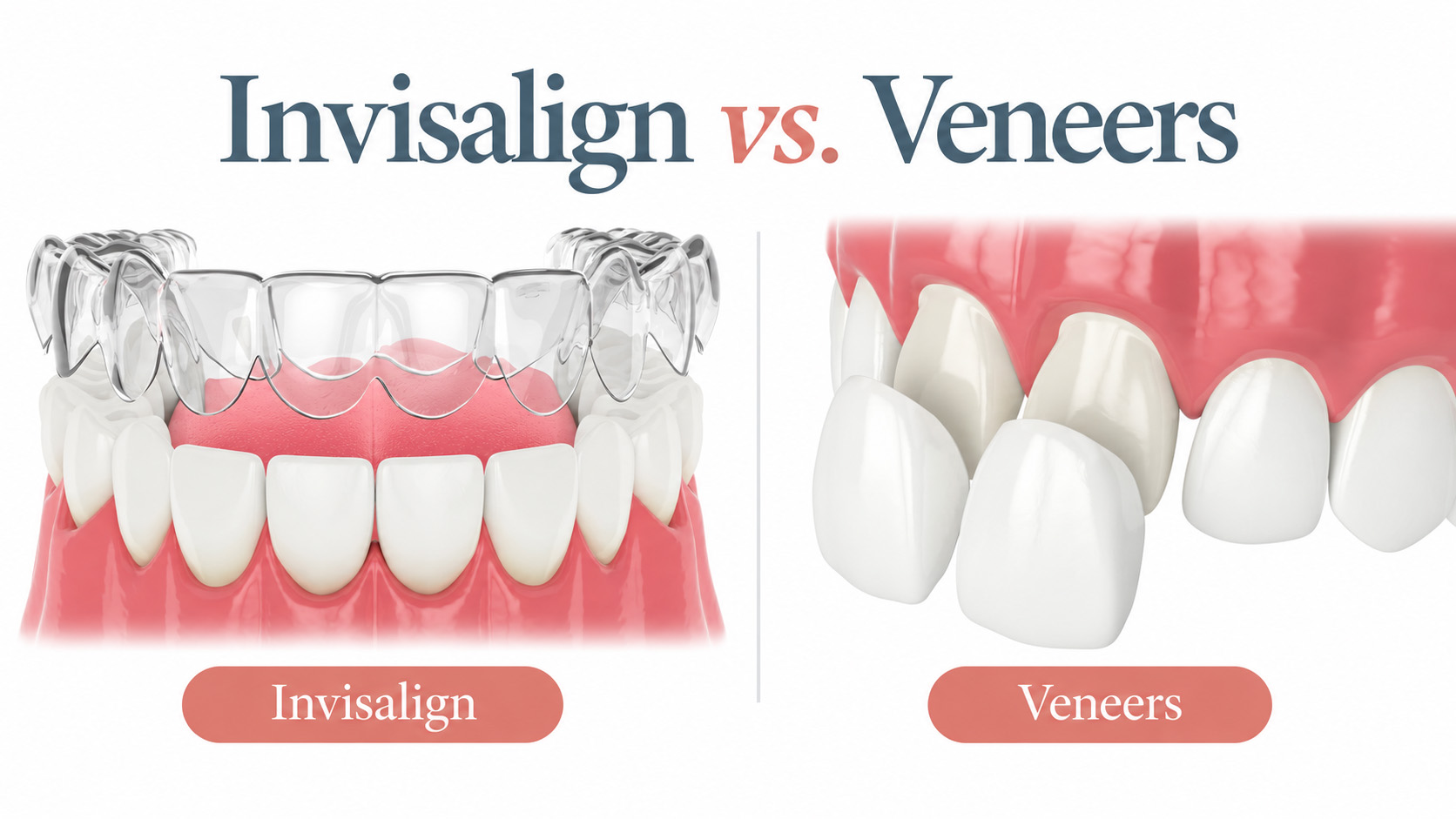
Dr. Heather Desh of HD Orthodontics breaks down two of today’s most popular options for a better smile.
Long Beach, CA – If you are not quite happy with your smile, you have probably explored two of today’s most popular treatment options: porcelain veneers and Invisalign® clear aligners. Both can transform the way your teeth look, but they go about it in very different ways. Dr. Desh often hears the same question from new patients: which one is actually better for a straighter smile?
The short answer is that it depends on what’s behind your concerns. The longer answer is worth knowing before you commit to either treatment.
We’ll start with veneers.
Veneers are thin shells of porcelain, or sometimes composite resin, that are custom-made and bonded to the front of your teeth. They are a cosmetic solution, which means they don’t actually move your teeth, they cover them. A skilled cosmetic dentist will shape, color and place each veneer so that your smile looks straighter, brighter and more uniform right there and then.
Veneers can be a great option for patients who deal with:
- Stained or yellowed teeth that don’t respond to whitening treatments
- Chips, cracks or rough edges
- Minor gaps between teeth due to undersized dental anatomy
- Teeth that are slightly crooked
The trade-off is that getting veneers usually means permanently changing your natural teeth. A thin layer of enamel is removed so the veneers can sit flush against the tooth, and once that is done, there is no undoing it, which means you will need veneers for the rest of your life. On average, veneers typically need to be replaced every 10 to 15 years.
Now onto Invisalign or similar clear aligner therapies.
Invisalign is a clear aligner system that actually moves your teeth into a straighter position. Rather than covering up misalignment, Invisalign corrects it. Your treatment plan is digitally designed by your orthodontist from the start, and you’ll wear a series of comfortable, nearly invisible aligners that slowly shift your teeth into place over time.
Invisalign is usually a better fit for patients with:
- Light to moderate crowding
- Rotated or overlapping teeth
- Gaps or spacing problems
- Crossbites, overbites or underbites
- A preference for a discreet alternative to traditional metal braces
Because Invisalign moves your natural teeth, the results come down to real orthodontic change. No enamel is removed, no shells are bonded on, and once your treatment is complete and you are wearing your retainer, the smile in the mirror is your own, just straighter.
So, which of the two is better?
This is one of the most common questions Dr. Desh hears, and the honest answer is that it really depends on the patient. Veneers and Invisalign solve different problems, so the “better” choice is the one that matches what you really want to change about your smile.
A few things worth thinking about as you decide:
- If your main concern is cosmetic (color, chips, shape) and your teeth aren’t significantly out of alignment, veneers may be the quicker route.
- If your teeth are crowded, gapped or the bite is off, Invisalign treats the actual problem instead of masking it. In fact, the more rotated and crowded the teeth are, the more tooth structure will need to be removed to accommodate for the veneers, which can lead to increased sensitivity and bigger issues down the road.
- If you want to keep your natural teeth as untouched as you can, Invisalign is the more conservative pick.
- If your timeline is tight and you have an event coming up, veneers can deliver results in just a couple of visits, while Invisalign usually takes at least a year or longer to achieve ideal alignment.
It is also worth knowing that these two treatments are not always an either-or choice. Some patients have crowded, overlapping teeth that are worn down after years of having a poorly positioned bite, so the best route is often straightening their teeth with Invisalign first and then adding a few veneers afterward for a final cosmetic touch-up. When it’s done in that order, the veneers can be smaller and more conservative because the teeth are already in the right position.
In other patients, orthodontist treatment may be necessary to even consider veneers; if veneers are placed and the bite is off, the patient may chip or break off the veneers when eating.
So, is Invisalign or veneers the better fit for you?
The best way to find out is by sitting down with Dr. Desh. During your consultation, she’ll look at your tooth alignment, your bite and your overall smile goals, and help you decide whether Invisalign, veneers or a combination of the two will get you the result you want. If a combination route is the best way to go, she will coordinate with your general dentist to develop a plan and timeline for your treatment to go smoothly.
Every smile is different, and every plan should be too. Call us at HD Orthodontics today to schedule a complimentary consultation, 562-283-6590.